
by Eddie Rodriguez, CAIB | Jul 20, 2011 | Research Centre

You’ll be happy to know that we work with several insurance companies who offer specialized insurance policies and coverages for the IT industry.
Because not all insurance companies (or their IT products) are the same, we’ve done the homework for you and have sourced out leading insurers that cater to various sub-segments of the the IT industry … from one-person firms to large multi-national companies.
Here’s are the types of IT businesses we work with – Is yours listed?
- I.T. Consultants
- Software and game developers
- Computer Training
- Data processors
- Data Storage/Retrieval Services
- Website Developers
- Web hosting and design facilities
- Access providers and co-location facilities
- Systems integrators, value-added resellers, and consultants
- Hardware, equipment & component manufacturer / assemblers
- Hardware Sales & Support
- Medical technology companies
- Internet, networking and other communications services.
and also:
- Telephone operations
- Telegraph operations
- Personal communications services
- Cable system operations
- Telecommunications component and equipment manufacturers
- Information service providers
- Interactive media services
- Telecommunications infrastructure development projects.
If you’re not sure if your type of IT business fits into one of the above categories, go ahead and contact us, using this brief online form.
The key thing to remember is that we can custom-tailor an Insurance Protection Plan that fits your needs.

by Colin Moor, CAIB | Jul 12, 2011 | Research Centre
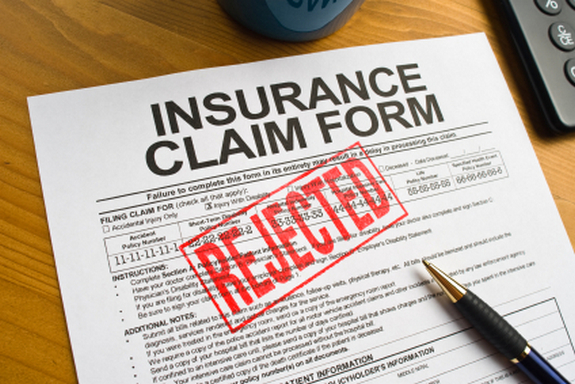
Imagine your home is damaged. You call your insurance agent to report the claim. And then you hear the worst news possible, “I’m sorry. That’s not covered by your policy.”
Now, you have a real problem.
The unfortunate truth is no insurance policy covers you for everything that could possibly happen to you or your property. However, with a little bit of understanding you can make sure you have the protection you want … and make sure your claims get paid by the insurance company.
Beware: It’s Not Always Covered
Just because you have an insurance policy that doesn’t mean your home is covered for everything.
Your home policy doesn’t cover you against every “cause of loss”.
What’s that?
Fire is a cause of loss. High wind is a cause of loss. These are also known as “perils” in insurance terminology.
A standard home policy excludes many causes of loss. That is, it does NOT protect you from certain perils – like earthquake, flood and surface water, termite damage and many more. That means if your home is damaged by one of these excluded perils your policy will not respond. You have no insurance against them.
If you want insurance against some of these perils, you can buy it … like earthquake or flood insurance. However, some excluded perils are not insurable … like insect damage. Be sure to discuss your policy exclusions with a broker in our office and buy the protection you really need. Don’t be caught by surprise after the damage is done. It’s too late to buy insurance then.
Special Limits On Personal Property
As if your home policy wasn’t complicated enough already it includes “special limits” of protection for some of your personal property. A “special limit” reduces the protection specifically available for certain types of property.
Property subject to a special limit typically includes … property used for business … cash & coin collections … jewelry & furs … guns … silverware … and more.
Additionally, some of these special limits apply only if the property is lost or stolen – making things just a little more confusing.
For example, the standard home policy typically includes only $1,000 of protection for stolen jewelry. If your $2,500 diamond engagement ring is stolen you’ll get only $1,000 from the insurance company. Ouch! And, if the stone falls out of the ring and is lost, there may be NO coverage at all!
The bottom line is it’s very important you fully discuss these conditions and special limits with your broker and buy the protection you need. Otherwise, you could find yourself with a very nasty surprise … an unpaid claim!
Conducting Business At Home
WARNING! Your home policy has very strict limits and rules about business conducted at home. The protection offered by your policy is severely limited if your claim arises from business activities. Your business property has very little coverage. And in some cases you may have no liability protection at all.
This is not something to take lightly and just assume everything will be fine. Be sure to discuss your home business activities with a licensed broker in our office to make sure you’re still protected.
Other Exclusions and Options
The standard home policy excludes protection for many things. But then the insurance company gives you an opportunity to buy some of them back.
Additionally, you have the option of increasing protection where you personally need it.
There are literally dozens of optional coverages available in your home policy. Here are some of the more common options available to you:
Identity Theft – many home insurers now offer protection for Identity Theft in their home policies. This will help pay the expenses you incur to restore your identity if it’s stolen.
Water & Sewage Backup – the standard home policy excludes damage caused by a water or sewage system backup. You can buy this protection if you want it.
Ordinance & Law –– pays the increased costs of repairing or rebuilding your home that are a result of changes in local building codes. For example, your home has single paned windows. After a loss, the local building department requires double-paned windows. This endorsement pays for the increased cost required by the new building code or bylaw.
Packaged Endorsements – often times an insurance company will package the optional coverages people most commonly buy into a single endorsement. That means for a lower price you can get several optional coverages added to your policy.
There are many more optional coverage and exclusion buy-backs your broker can explain to you. Take a few moments to understand them and make good decisions about your protection.

by Eddie Rodriguez, CAIB | Jul 12, 2011 | Research Centre
What you’ll discover in our “home insurance” articles:
- How your home may not be fully rebuilt – even though you have insurance!
- 11 ways to save money on your home insurance – including how to catch your insurer automatically increasing your premium every year
- SIX primary kinds of insurance in your home policy? Yes … and the right decision for each one
- The secret to brushing off a lawsuit
- How your jewelry and other personal property are NOT covered – and what to do about it!
- Why what’s not covered is more important than what is
- And more!
Your home is probably your most valuable asset. It is also a huge risk for you financially.
What if something happens to it?
A fire? A flood? Vandalism? Will your insurance policy actually pay for the damage? Will it pay for ALL of it?
What if someone visiting you slips and falls and suffers a serious injury? And sues you? An accident like that could put a dent — or worse — in your financial security.
For most people, insurance is a mystery. They know they need to have insurance for their homes (mortgage lenders require it), but they don’t understand the protection provided by the policy. And, more importantly, they don’t understand what their policy does NOT cover and what to do about that.
All homeowner’s insurance is not created equal. In fact, almost none of it is. There are thousands of different products out there, from hundreds of insurance companies. And your policy includes literally dozens of options and decisions you must make that determine how much insurance protection you actually have. Your home policy is not a commodity. It’s something tailored specifically to your needs and desires.
Six Primary Coverages Provided By Your Home Policy
Your home policy protects you in six primary ways. You’ll find these listed on your policy’s “Declarations” page. Here’s what they mean to you.
Dwelling
The word Dwelling in your home policy essentially refers to your home itself. It includes attached structures, as well … like an attached garage. The Dwelling Limit (or Amount of Insurance) stated on your Declarations page indicates the most the insurance company will pay to replace your home if it’s destroyed by a covered claim. Is it enough?
Warning: Don’t make the mistake of thinking your home is fully covered just because you have an insurance policy! You must make sure your Dwelling Limit is enough to rebuild your home. How?
Contact our office and one of our brokers can run a replacement cost estimate that calculates the cost to rebuild your particular home. Be sure to adjust the amount of insurance for your dwelling appropriately. If you don’t you may not have enough insurance to replace your home if disaster strikes.
Note: Some policies include built-in protection above the stated Dwelling Limit – usually a percentage of the Dwelling – just in case the estimate is too low. Be sure to discuss this with us as an additional protection feature. It’s probably worth having.
Other Structures
The most common Other Structures are sheds, stand-alone garages (known as “detached” garages in insurance terms), barns, pool houses, etc. These structures are not directly attached to your home, the “dwelling”.
Other Structures have their own protection limit – the most your company will pay to rebuild them – as stated on your Declarations page. This limit will be significantly less than the dwelling limit … usually 10% – 20% of the dwelling
For most people that’s plenty of insurance for other structures. But not for everyone. You need to know what it would cost to rebuild or replace those structures if they’re destroyed. Discuss it with the licensed professionals in our office. You can buy more protection for your other structures if you need it.
Personal Property
Your personal property is all your stuff – furniture, clothing, electronics, appliances, art collection, jewelry, etc. It, too, has its own protection limit stated on your Declarations page. And, again, this amount is the most the insurance company will pay to replace your personal property.
Your personal property limit is usually 70% – 75% of your dwelling limit. However, you can adjust this upward if you need more protection, Discuss your options with us. We’re here to help!
Regardless of the protection limit for your personal property, there’s a very important question you must get answered. How is your property protected … on an “actual cash value” basis or a “replacement cost” basis? The difference is huge!
In very basic terms, if your property is protected on a replacement cost basis the insurance company will replace your old stuff with new stuff. For example, if your 5-year old TV is destroyed in a covered claim, the company will pay for a brand new TV. That’s a good deal for you.
But if your property is protected on actual cash value basis, an “allowance for depreciation” is applied to the cost of a new TV based on the age of your destroyed TV. The result is you get a settlement amount less than the cost of a new TV. To buy a new TV you’ll have to come up with the difference out of pocket. Not as good a deal for you.
Clearly, insuring your personal property on a replacement cost basis is much better protection than actual cash value. Sometimes it costs a bit more, but not always. Make sure you know how your policy works and check the price both ways. Make the right decision for you.
Loss of Use
If your home is badly damaged you won’t be able to live in it while it’s being fixed or replaced. That means you may have to pay rent somewhere while you’re also paying your mortgage. The Loss of Use coverage on your home policy pays those additional expenses for you.
Your Declarations page may state a dollar limit for this coverage, or it may state a time limit. If there is a dollar limit, this is the most the insurance company will pay for these expenses. If there’s a time limit, your insurance will pay all covered expenses regardless of the amount but only for the specified period.
Liability
Your liability coverage pays if someone sues you for their injuries due to a covered claim. When we think of such accidents we most commonly think of injuries that occur on your property – someone slips and falls, a dog bite, etc.
However, the liability protection under your home policy extends beyond your property to your everyday life. For example, your home policy could also protect you if you knock someone over with a shopping cart at the grocery store.
Liability insurance is all about protecting your assets from someone who sues you. So, you should have at least as much liability insurance as your financial worth. However, more than that may be prudent, and you should discuss your needs and risks thoroughly with a licensed broker in our office. Your current liability limit will be stated on your Declarations page.
Medical Payments to Others
This pays medical bills for a guest who is injured on your property or in another covered claim. The idea is to do the right thing for someone – pay their medical bills – and then hope they don’t sue you. This protection is inexpensive, but could save you major hassles by preventing a lawsuit.
by Colin Moor, CAIB | Jul 12, 2011 | Research Centre
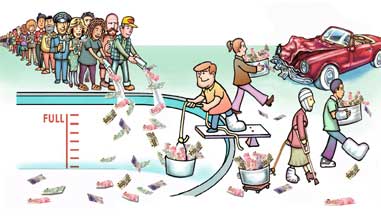
While it may seem complex, insurance is really quite simple: The payments (or premiums) of the many pay for the losses of a few.
Your premiums go into a large pool, if you will, at your insurance company. The claims of the few are paid from that pool. Because there are more people contributing to the pool than there are making claims, there is always enough to pay the claims – even large single claims like when someone is permanently disabled as a result of a car collision, or many smaller claims like those resulting from a natural disaster. (The 1998 ice storm that hit parts of Ontario, Quebec and New Brunswick resulted in an estimated 700,000 claims for damage totalling $1.4 billion.) However, large disasters (such as the ice storm) do come close to emptying the pool.
Insurance for insurance companies
Even when the pool comes close to emptying, there is another pool from which insurance companies can draw to pay claims. Some of your premiums are used by your insurance company to buy reinsurance – insurance for insurance companies.
Sometimes losses are so big – like those resulting from an earthquake – that there is no way that an insurance company can cover the costs. Reinsurance is an extra layer of protection against large losses.
Annual replenishing
Your insurance is an annual contract, so the pool operates for only one year at a time.
Your premiums and the premiums of others are based on how much money the insurance companies think they will need to pay the coming year’s claims. Your premiums do not build up over the years – unlike the premiums for some types of life insurance.
How premiums are calculated
Within reasonable limits, some of which are prescribed by law, your premium is calculated to reflect the probability that you will make a claim – that is, that you will draw funds from the insurance pool. Those who are unlikely to draw from the pool pay less than those who are more likely to draw from it.
Insurers take many factors into consideration to determine the likelihood that you will make a claim. A common misconception is that a policyholder who has never made a claim should pay less, little or nothing for insurance. While it is true that past claims history is important, a more reliable indicator of how likely a person or business is to make a claim is the statistical group to which he/she/it belongs.
Industry earnings
Insurance companies generally do not make money on the premiums gathered from policyholders.
In 2005, insurance companies paid more than $21 billion in claims while taking in $35 billion in premiums. The difference between the premiums and claims, in this case $14 billion, is used by the companies to pay salaries and taxes ($6.2 billion in 2005), and to cover the overhead costs (such as electricity bills) of running a business. It is also used to pay the administrative costs of settling a claim.
Insurance pays for …
Insurance pays for only those types of losses described in your contract. It is very important that you read your policy and/or talk to your insurance broker about what you are covered for and what you’re not.
Insurance will not pay for every problem that you may encounter, nor is it a maintenance contract.
Insurance is generally intended – and priced accordingly – to help policyholders cope with the financial consequences of unpredictable events that are “sudden and accidental.”
If, for example, you live on a floodplain by a river, flooding of your property in the spring is not sudden or accidental; it is inevitable and, therefore, uninsurable.
Source: Insurance Bureau of Canada

by Eddie Rodriguez, CAIB | Jul 11, 2011 | Research Centre
You can get sideways with your insurance company because you haven’t been upfront about how you are using your vehicle.
For example, do you drive your car to work? If so, you will pay more for auto insurance than if you take mass transit. In fact, the further you have to drive to work, the more you will pay.
* Tip. If you drive to work and tell your insurance company you don’t, you have basically committed fraud. Resist this temptation, even if it might save you a few dollars.
* Example. Say you have an accident on the way to work. Say, also, that you have told your insurance company you don’t drive to work. Your insurer could technically argue that it is not obligated to provide coverage and you’ve given them a good reason to cancel your policy.
Honesty is the best policy when it comes to insurance. Insurance fraud is a huge problem in North America, and Ontario is no exception; claims are frequently padded with nonexistent damages; accidents are staged and injuries are faked.
* Fact. It is estimated that fraud accounts for as much as 25 cents to 30 cents of every auto insurance premium dollar. Think about that. If even half the auto insurance fraud in in North America were wiped out in the next year, you would pay 12% to 15% less for your next policy.
Personal Car for Business, Company Car for Personal Use
Do you use your personal car for business?
Do you have access to a company car?
If the answer to either question is yes, you could have potential coverage gaps.
* Example. Let’s say you use your personal car for business. It’s possible your employer is providing some coverage for you through your employer’s commercial auto policy. In most cases the coverage is for liability only, and often this commercial auto policy doesn’t even apply until the limits on your personal auto policy are exhausted. (This is what insurance people call “excess” coverage.)
* Tip. You should talk to your employer about what, if any, coverage is available to you through the company’s commercial auto policy. That way, if you have an accident while on company business, you know who (or which insurance company) to call.
If you use your personal car for regular business purposes – trips, visiting clients, etc. – your personal auto policy probably provides enough coverage for these activities. (Assuming you have “enough” coverage to begin with.)
But what if your car is actually a source of revenue? You make deliveries, for example. In that case, you likely need a commercial auto policy as well.
* Note. If you have an accident while delivering a product or using your car as a taxi, your personal auto insurer may deny your claim. Talk to your broker to make sure you have coverage for all the business activities for which you use your car.
What about company cars? They can be an insurance problem, if you use the company car for business and pleasure, particularly if you don’t have a car of your own.
If you don’t have a car, you probably don’t have a personal auto policy. If you don’t have a car (or personal auto coverage) and use a company vehicle for pleasure, you are inviting disaster if you have an accident during a pleasure trip.
* Tip. If you are in this situation, you should have what is called a non-owned personal auto policy.
Such a policy can also come in handy if you don’t have a car and you rent a vehicle on a trip. Your non-owned auto policy will cover you and your rental car if you have an accident. Otherwise, you would probably need to buy coverage from the rental car company, coverage that is very, very expensive.
* Tip. You can have coverage gaps even if you have a personal auto policy and use a company car for pleasure or if your spouse or children use the company car for pleasure. Find out from your employer the extent of coverage that is available for your corporate car. Once you know the extent, talk to your MIB insurance broker about any additional coverage you might need.

by Eddie Rodriguez, CAIB | Jul 11, 2011 | Research Centre
All the coverages in your auto policy apply when you are driving, but they also apply when other people are driving your vehicle.
The coverages are actually for the car, not the person.
* Note. If someone is going to be a regular user of your car, that person’s name needs to be added to the policy.
Your insurance company wants to know who’s going to be using the car. After all, you could be a great driver with no tickets or accidents, but your spouse, your teenage child, or your reckless cousin could be a lousy driver.
If you let these people drive your car without telling your insurer and these people keep getting in accidents, your insurance company isn’t going to be happy. In fact, they may cancel your policy.
* Tip. It’s not wise to risk losing your policy by failing to disclose who’s driving the insured vehicle. Keep in mind, however, that if you add drivers with lousy records or who haven’t had much driving experience, your premiums will go up.
Any parent of a driving teenager can tell you this; teenagers are notorious for getting tickets and having accidents. They are also very inexperienced drivers. As such, when your child gets his or her license, your insurance premiums will go up when he or she is added to the policy. (There are a few exceptions to this … In some cases, your premium will NOT go up when adding a young, inexperienced driver).
This is a complex issue, and you’re better off to contact your MIB broker and tell him/her what your particular situation is.